The Certificate You Need Before You Touch a Window in Dilworth
October 1, 2026
October 1, 2026
In July 2025, a case landed on the Charlotte Historic District Commission's desk for a house at 916 East Boulevard in Dilworth. The work was already done. A contractor had removed the original wood fascia and rake boards and installed wider synthetic trim in their place, and had started restoring the home's original chimney. Because none of it had gone through the Commission first, the file was processed as an after-the-fact review, meaning the board had to judge finished work against the same standard it would have applied before a hammer touched the house. Its notes on the case were specific: the original fascia and rake board material no longer existed to compare against, and the application never included measurements of what had been there originally, so there was no way to confirm whether repair had ever been an option.
That's what owning a house inside one of Charlotte's Local Historic Districts actually means day to day. Not a plaque, and not a line on a National Register map. A working design-review board that has to sign off on exterior changes before the city will issue a building permit, running on its own monthly schedule whether or not the homeowner realized that schedule existed.
Charlotte's City Council has designated eight neighborhoods as Local Historic Districts: Dilworth, Fourth Ward, Hermitage Court in Myers Park, McCrorey Heights, Oaklawn Park, Plaza Midwood, Wesley Heights, and Wilmore. That's a different and stronger designation than the National Register listing that covers Myers Park, Elizabeth, North Charlotte, and Pharrsdale near Eastover. The distinction matters at the block level, too. Hermitage Court sits inside Myers Park's broader footprint but carries its own Local Historic District status, which means one corner of Myers Park answers to the Commission while the rest of the neighborhood doesn't.
The Historic District Commission is a twelve-member board that meets on the second Wednesday of each month at 1 p.m. and reviews any exterior change visible from a public street across all eight districts, Dilworth included. A Certificate of Appropriateness has to be approved before the city issues a building permit for that work, not after. The realistic timeline is four to eight weeks from a complete submittal to a decision, longer if the case gets deferred for revisions or has to wait for the next meeting date. Interior work and changes to elevations that can't be seen from the street generally skip this review, but builders who work in Dilworth regularly still confirm that with Commission staff before assuming anything is exempt.
Some categories of work clear at the staff level without a full hearing: routine landscaping, straightforward window or door replacement, roof replacement, removal of a dilapidated accessory structure, and minor changes to shutters or gutters. Others go before the full Commission every time: additions, new openings cut into a street-facing wall, chimney reconstruction, and material substitutions like the fascia swap at 916 East Boulevard.
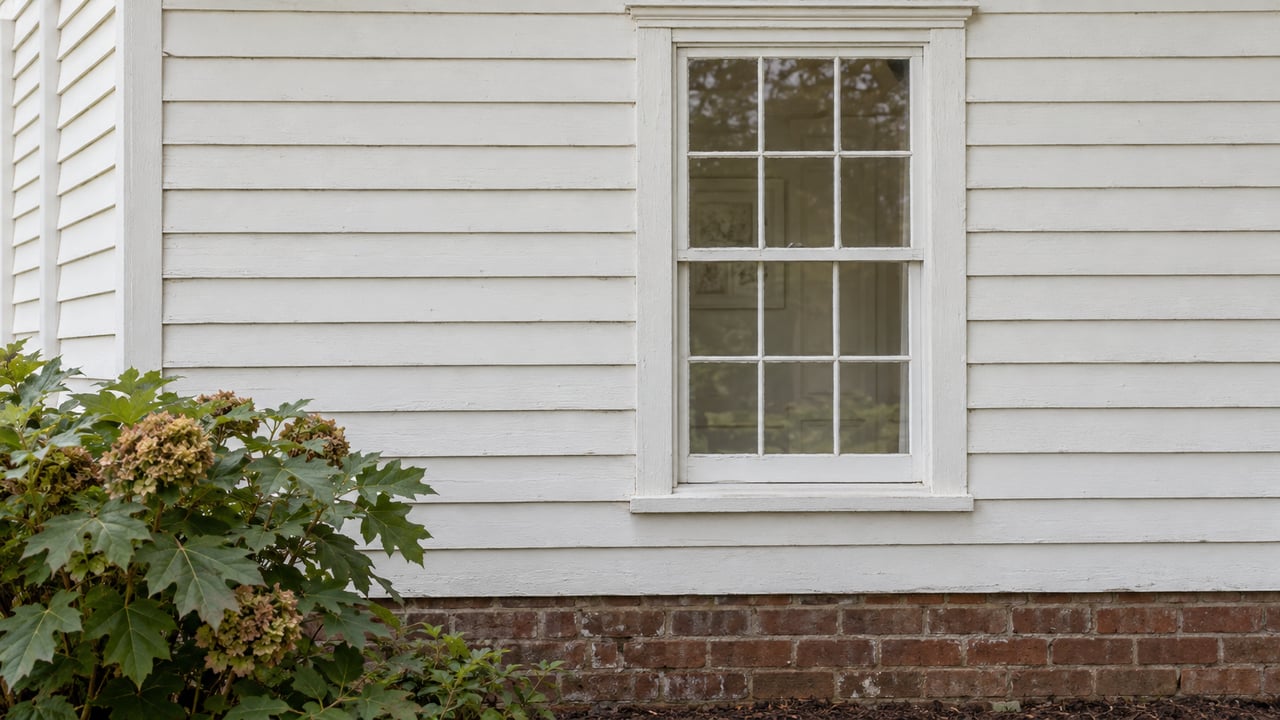
A separate case at 2126 Charlotte Drive, also in Dilworth, spells out the standard the Commission applies to windows. If a window has to be replaced, the original size, shape, and number of panes has to be maintained. New openings on the front of the house are avoided. A missing window gets reconstructed from old photographs where they exist. If a front window is beyond repair and there's a matching original somewhere else on the house, the guidance is to relocate that one to the front and install something new on a side or rear elevation instead, so the primary facade keeps its original material even if the house doesn't.
The same file lays out the rule for additions: set them behind the main roofline, pull them back from the front of the house, and keep them smaller in scale so they read as clearly newer, while still matching roof pitch, siding reveal, and trim proportions closely enough that they don't visually compete with the original structure.
This review isn't limited to single-family homes. A December 2024 filing for 1100 East Boulevard, a property operating as a youth crisis center, needed the same sign-off for a new entry door and windows tied to an interior room reconfiguration, with the new materials required to match what already existed on the elevation facing East Boulevard. Institutional use doesn't exempt a building from the district's design standards.
Contractors who take on Dilworth projects regularly describe treating the review process as part of the design itself rather than a step to handle once drawings are finished. A scheme that gets sent back for revision after a rejected submittal costs months, not days, which is why some local design-build firms sketch with the Commission's guidelines open next to the site plan from the first meeting.
Dilworth's housing stock dates mostly to the 1900s through the 1920s, and the structural issues that show up during renovation follow a pattern: undersized or rotted sill plates, settled brick piers, floor framing sagging under loads the original builders never planned for, like a tile bathroom floor or a cast iron tub, porch structure that's been exposed to weather for decades, knob-and-tube wiring, and galvanized plumbing well past its service life. A structural engineer's assessment before finalizing the scope of a project is the standard way to catch these before they become mid-renovation surprises rather than after.
The single most common line item that blows a Dilworth renovation budget isn't finishes. It's structural and mechanical work discovered after demolition starts, which is why any allowance-based estimate on an older Dilworth house is worth treating as a placeholder rather than a number to build a final budget around.
A Dilworth designation reads like a fixed line on a map, drawn once in the 1980s and left alone since. A review of Charlotte's historic districts conducted through UNC Charlotte's Urban Institute found something closer to the opposite. Dilworth's district is largely intact, but several blocks near the light rail corridor on South Boulevard have already had their boundaries compromised by new construction. The same review warned that if that pace of building and major additions continued across the district, the status of the whole designation would be at risk, and the boundaries would need major revision to reflect what had actually survived. It also flagged the reverse happening at Dilworth's southern edges, where blocks that weren't considered historic in earlier surveys might now qualify for protection they don't currently carry.
One planner quoted in that review framed the value of local designation as qualitative rather than quantitative: better construction quality, houses that last longer because they're maintained to a consistent standard, and architectural consistency from block to block that a National Register listing alone doesn't require.
There's a financial layer to this too. Local Historic District status by itself doesn't come with a tax credit. That benefit only applies where a property also sits inside a National Register district, and Dilworth, along with Wesley Heights, holds both designations. An owner maintaining a Dilworth property to the Commission's standard can access the tax credit tied to Dilworth's 1987 National Register listing in a way an owner in a local-only district like Plaza Midwood cannot. Neither designation stops a demolition outright, but inside a Local Historic District the Commission can delay one for up to a year, a tool that simply doesn't exist in a National Register-only neighborhood.
A few things worth confirming before you're under contract or scoping a renovation budget:
The Dilworth Community Association keeps current information on the Historic District Commission's process for residents evaluating a project, and it's a useful first stop before a property goes under contract.
Does every exterior project in Dilworth need a full Commission hearing? No. Routine items like landscaping, standard window or door replacement, and roof replacement typically clear at the staff level. Additions, new street-facing openings, and material substitutions go before the full monthly hearing.
Is Dilworth's Local Historic District status the same as being on the National Register? No, and Dilworth holds both. The Local Historic District designation gives the Commission actual review authority, including the ability to require a Certificate of Appropriateness and delay a demolition by up to a year. The 1987 National Register listing is what makes historic tax credits available to owners who maintain that character.
Could Dilworth lose its historic district status? Not overnight, but a review of Charlotte's historic districts found that new construction near South Boulevard has already compromised some boundary blocks, and warned that continuing at that pace would put the district's overall status at risk and force a boundary revision.
Buying or renovating inside Dilworth's Local Historic District comes with real procedural weight, and the details above are the ones that shape a timeline and a budget before a single wall comes down. Theresa Pavone at Next Move Carolinas works with buyers and renovators across Charlotte's historic and new-construction markets and can walk through what a specific Dilworth address means for your plans before you're under contract.




Experience a personalized journey to your dream home with Theresa Pavone. Every step, from consultation to closing, is thoughtfully curated to meet your unique vision of luxury living.